Language

In the valve&sealing field, Flexible Graphite (also named as Expanded Graphite) is a pure graphite sealing material made from natural graphite through special chemical treatment, extreme heat-resistance, and also compression. It is not rubber (like X5, X6) or plastic (like PTFE); the graphite is an inorganic non-metallic material, especially famous for its extreme high-temperature resistance and extraordinary sealing performance.
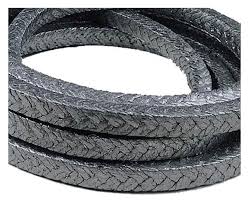
If PTFE is the "Plastic King," then Flexible Graphite is the expert in solving the "High-Temperature Demon" issues.
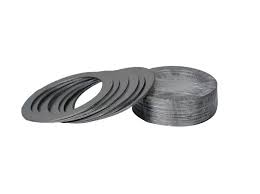
In-Depth knowledge of Flexible Graphite
1. Extreme Temperature Resistance
This is the most prominent advantage of flexible graphite. It can handle long-time in conditions ranging from -200℃ cryogenic temperatures to +550℃ in oxidizing environments (like air). If involved in an oxygen-free or inert gas environment, it can even put up with temperatures as high as 3000℃. This makes it the only option for high-temperature applications including steam systems, thermal oil heaters, and engine exhaust systems.
2.Remarkable Chemical Stability
Besides strong oxidizing agents (e.g., fuming sulfuric acid, concentrated nitric acid, and aqua regia), flexible graphite exhibits good chemical inertness to nearly all acids, bases, solvents, oils, and water.
3. Distinct Sealing Mechanism
The graphite is unlike rubber, which requires elastic compression, it possesses great compressibility and resilience. The graphite is very soft and easy to deformation to fill tiny irregularities on flange surfaces. What’s more, due to its special microstructure, the graphite can remain a certain "spring-back" ability after compression, making up for thermal expansion and contraction caused by temperature changes, thus guaranteeing a sort of very reliable seal.
4. Other Significant Characteristics
No Aging: the graphite is not like rubber, which hardens and breaks down as time goes by, it has almost no aging problems and endures a long-term storage.
Electrical/Thermal Conductivity: As a graphite, it has good electrical and thermal conductivity, which is conducive to heat dissipation.
High Purity: It contains no organic binders, making it appropriate for applications with extremely high purity demands, for instance: nuclear power plants.