Language

Socket Weld is a connection method where a pipe is inserted into the socket (recessed hole) of a fitting or valve, and then a fillet weld is applied to the outer joint between the two, making them an integral assembly.
This connection method is easy to operate, highly proven, and is widely applied particularly in small-bore (typically DN50 and below) and medium-to-high pressure applications.
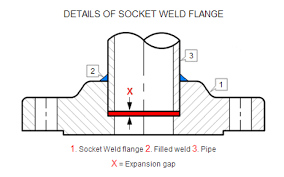
Below is a detailed explanation:
The key operation of a socket weld can be summarized in three steps:
Insertion: Insert the pipe end into the socket reserved hole of the fitting, flange, or valve.
Gap Retention: Leave an expansion gap of approximately 1.6mm between the pipe end and the bottom of the socket to prevent unnecessary internal stress given rise to thermal expansion during welding.
Welding: Employ a fillet weld on the external of the fitting, along the circumference where the pipe and socket meet.
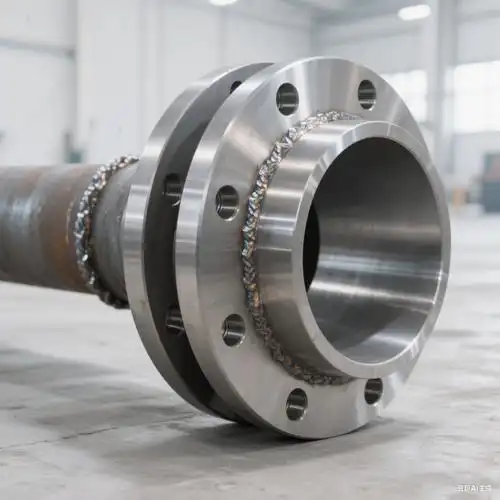
The difference between a socket weld and a butt weld is that butt welding requires beveling the pipe end before butt joining, while a socket weld is like a "socket" – you insert the pipe and then weld it.
Socket weld is a established, regularized connection method with complete specification frameworks both domestically and internationally.
Suitable Dimension: Mainly used for small-bore piping. Typically suitable for pipes of nominal diameter DN50 (2 inches) and below. However, in the national standard GB/T 14383-2021, the applicable range for some types of socket weld fittings has been extended to DN100.
Pressure Ratings: Based on pressure-bearing capacity, they are mainly divided into three classes: 3000LB, 6000LB, and 9000LB. The higher the number, the greater the pressure-bearing tolerance.
International Standard: ASME B16.11 (American Society of Mechanical Engineers standard).
Chinese National Standard: GB/T 14383-2021 Forged socket-welding and threaded fittings.
Mechanical Industry Standard: e.g., JB/T 7746 Small-scale steel valves, etc.
Socket weld connections demand specialized fittings and valves, with a diverse range of types and materials.
Common Fitting Types: Include 45°/90° elbows, tees, crosses, couplings, caps, unions, and socket weld flanges, etc.
Common Valve Types: Mostly small-bore forged steel valves, for instance socket weld gate valves, globe valves, check valves, and ball valves, etc.
Common Materials: A wide selection of materials is available, ordinarily including:
Carbon Steel: e.g., A105, 20#, operated for typical operating conditions.
Stainless Steel: e.g., 304/304L, 316/316L, utilized in corrosive environments.
Alloy Steel: e.g., 15CrMo, employed in high-temperature, high-pressure scenarios.