Language

Hydraulic actuation gives butterfly valves the output torque and controlled movement required for demanding pipeline applications. By matching actuator torque, hydraulic supply pressure and valve operating conditions, industrial operators can achieve more reliable opening, closing and remote control. This article explains how hydraulic actuators work with double offset butterfly valves, CF8 stainless steel discs and soft-seat sealing systems in industrial applications.
In industrial pipeline systems, a butterfly valve must do more than simply open and close. It needs to respond to operating commands, overcome resistance from the flowing medium and maintain its required position under changing pressure conditions. These requirements become particularly important in large-diameter pipelines and systems with frequent operating cycles.
At Zhongguan Valve, we consider the actuator and valve as one operating assembly rather than two independent components. A hydraulic actuator uses pressurized hydraulic fluid to generate rotary movement, turning the valve disc through approximately 90 degrees between the fully closed and fully open positions.
Compared with manual operation, hydraulic actuation offers several practical advantages:
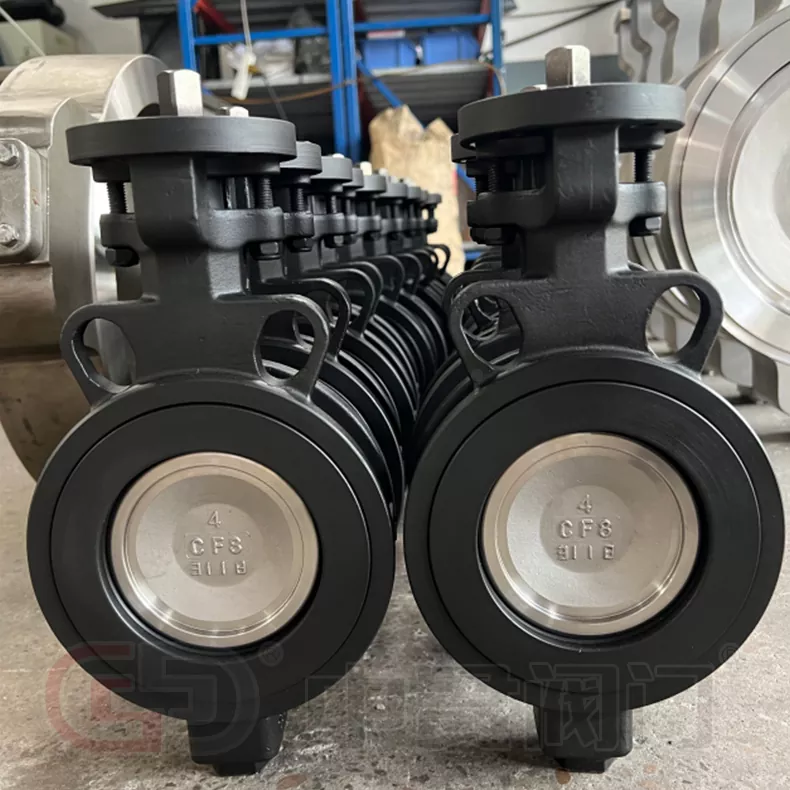
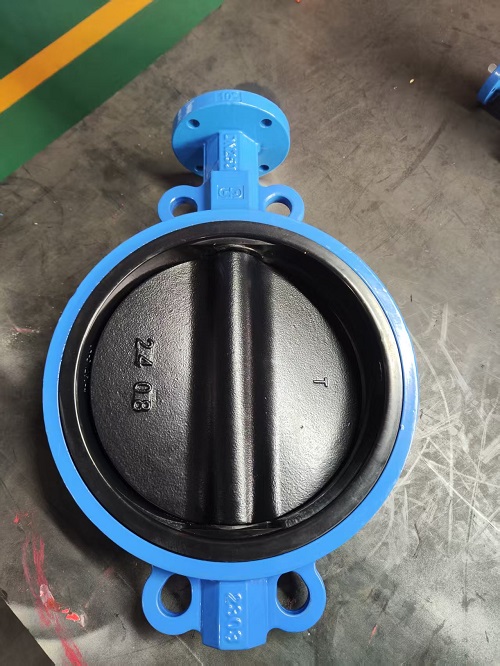
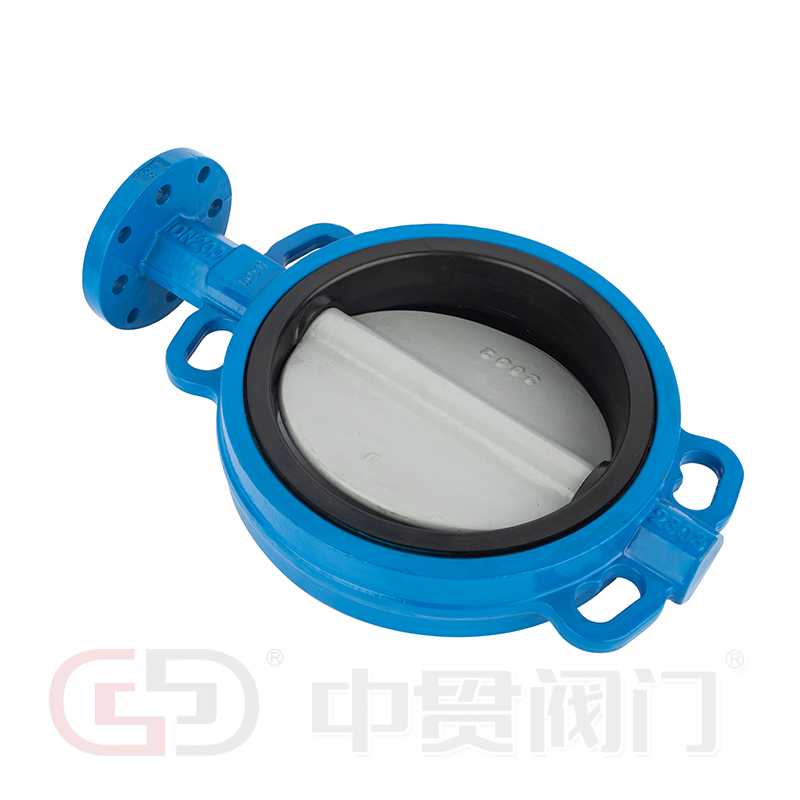
For applications requiring automated isolation, our CF8 Disc Butterfly Valve with Hydraulic Actuation combines a stainless steel disc, resilient seat and hydraulic drive to support controlled pipeline operation.
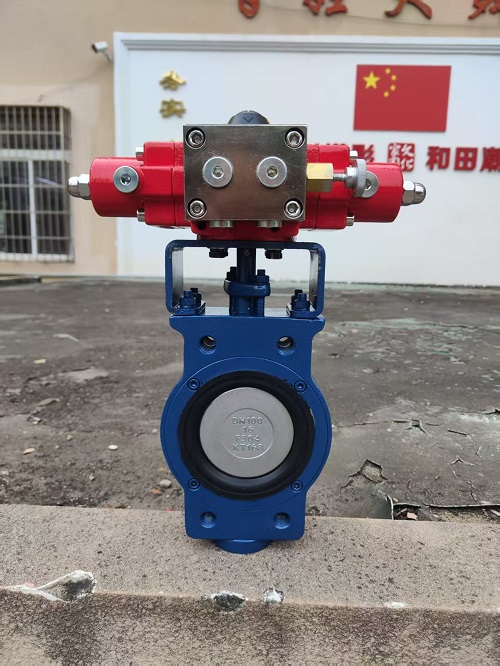
The main reason for selecting hydraulic actuation is torque demand. When a butterfly valve operates under high differential pressure, the disc experiences resistance from both the sealing system and the flowing medium.
A manual gearbox may require considerable operator effort, especially when operating larger valves. Hydraulic actuation converts pressure energy into mechanical output torque, making it possible to operate the valve remotely and repeat the same movement more consistently.
Three factors deserve particular attention.
Hydraulic actuators are suitable for applications where the valve requires substantial breakaway torque to move away from its closed position. This is relevant to large-bore pipelines, pressure-control systems and industrial isolation duties.
Hydraulic flow control can regulate actuator speed. This is useful when a valve must close within a defined operating period or when sudden closure could create pressure surges in liquid pipelines.
We recommend confirming the required stroke time against pipeline conditions rather than simply choosing the fastest available actuator.
A hydraulic actuator can be connected to a hydraulic power unit, control valves and position feedback devices. Depending on the selected configuration, operators can issue opening and closing commands from a remote control panel.
This arrangement is particularly useful in power plants, oil and gas facilities and chemical processing systems where valves may be installed in locations that are difficult to access.
Actuation performance also depends on the mechanical design of the butterfly valve.
A double offset butterfly valve uses two offset axes: the stem is displaced from the disc sealing plane and from the pipeline centerline. This geometry allows the disc to move away from the seat during opening instead of continuously rubbing against the sealing surface.
The resulting benefits include:
For hydraulic butterfly valve applications, reduced mechanical resistance can also help the actuator operate more efficiently.
However, the actual actuator torque must still be calculated from valve size, seat material, differential pressure, flow conditions and the manufacturer's torque data. Double offset geometry does not eliminate the need for proper actuator sizing.
Material selection directly affects valve service life and sealing reliability. In our CF8 Disc Butterfly Valve with Hydraulic Actuation configuration, the body and disc serve different purposes.
CF8 is a cast stainless steel grade commonly associated with 304 stainless steel composition. It provides corrosion resistance for many water, utility and mildly corrosive industrial media.
Because the disc is directly exposed to the flowing medium, its material should be selected according to the chemical composition, temperature and operating conditions of the pipeline.
For more demanding corrosive environments, CF8M stainless steel (316 cast stainless steel) may be considered where compatible with the application.
The WCB body provides the main pressure-containing structure. It offers a practical balance between mechanical strength and manufacturing cost for suitable industrial pipeline services.
The soft-seat configuration can be supplied with different sealing materials according to operating requirements.
| Seat Material | Typical Considerations | Potential Applications |
|---|---|---|
| EPDM | Suitable for many water-based services | Water supply, wastewater, HVAC |
| NBR | Suitable for selected oil and hydrocarbon services | Industrial oil lines |
| PTFE | Broad chemical resistance, subject to temperature and pressure limits | Chemical and process pipelines |
The correct seat material must be confirmed against the actual medium and operating temperature. For steam applications, in particular, we do not recommend selecting a seat based only on the general valve temperature range.
Choosing an actuator based only on the nominal valve diameter is not sufficient. Two butterfly valves with the same DN may require different actuator outputs because of differences in seat construction, pressure differential and operating conditions.
Before confirming an actuator configuration, we recommend checking the following parameters.
| Selection Parameter | Information Required | Why It Matters |
|---|---|---|
| Valve diameter | DN40–DN1600 | Determines valve size and operating requirements |
| Pressure rating | PN10 / PN16 or project requirement | Establishes the pressure conditions |
| Differential pressure | Maximum pressure difference across the disc | Affects operating torque |
| Seat material | EPDM, NBR or PTFE | Influences sealing friction and temperature suitability |
| Hydraulic supply pressure | Actual available system pressure | Determines actuator output |
| Operating time | Required 90° opening or closing time | Helps configure hydraulic flow |
| Control mode | On/off or modulating, if supported | Determines actuator and control accessories |
| Fail-safe requirement | Required position after power or hydraulic failure | Determines additional actuator configuration |
A practical actuator selection process should include three torque conditions:
We also check the actuator's available output at the minimum specified hydraulic supply pressure, not just its maximum rated output.
This helps avoid undersized actuators that struggle to complete a stroke and oversized configurations that may place unnecessary mechanical loads on the valve stem and seat.
Hydraulic actuated butterfly valves are used in applications where remote operation, higher torque output or controlled valve movement is important.
| Industry | Typical Pipeline Service | Main Operating Requirement |
|---|---|---|
| Power generation | Cooling water and auxiliary utility lines | Reliable remote isolation |
| Oil and gas | Process and utility pipelines | High torque and automated operation |
| Chemical processing | Compatible process media | Material and seat compatibility |
| Water treatment | Pump discharge and treatment lines | Repeatable opening and closing |
| HVAC | Chilled water and district heating | Centralized pipeline control |
| Industrial manufacturing | Circulation and transfer systems | Reduced manual intervention |
For each application, we recommend evaluating the actual medium, pressure differential, temperature and installation conditions before confirming the valve configuration.
Zhongguan Valve is located in Yongjia, Wenzhou, Zhejiang, a major pump and valve manufacturing area in China. We have more than 10 years of experience in professional butterfly valve production and maintain cooperation with domestic and international customers.
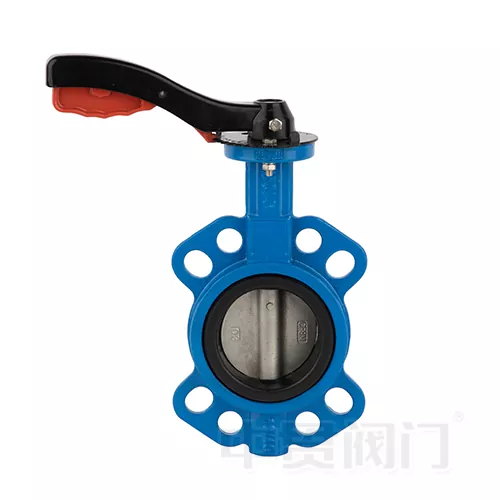
Our butterfly valve product range covers several structural configurations:
Our main production diameter range is DN40 to DN1600, with larger sizes available for project evaluation.
For hydraulic actuated butterfly valve projects, we focus on the practical details that affect installation and operation, including body configuration, disc material, seat selection, pressure rating and actuator requirements.
We recommend that customers provide the following information when requesting a quotation:
With these details, our team can review the proposed valve configuration and coordinate the appropriate technical specifications.
You can also explore our complete butterfly valve product range or visit our product catalogue for additional valve options.
The main advantage is high torque output combined with remote and controlled operation. Hydraulic actuators are particularly useful when large-diameter valves or high differential-pressure conditions make manual operation difficult.
Hydraulic actuators use pressurized liquid to generate mechanical force, while pneumatic actuators use compressed air. Hydraulic systems are often selected when higher torque is required within a compact installation. Pneumatic systems may be more convenient where a reliable compressed-air supply is already available.
It may be suitable for selected steam and condensate applications, but the seat material and operating temperature must be carefully verified. EPDM, NBR and PTFE have different temperature limitations. Actual steam conditions should be checked before finalizing the valve specification.
Start with the valve manufacturer's torque data at the specified differential pressure. Then consider breakaway, running and seating torque, hydraulic supply pressure, required operating speed and an appropriate design margin. Valve DN alone cannot determine actuator size.
A standard quarter-turn butterfly valve generally operates through approximately 90 degrees, moving between fully closed and fully open positions. Intermediate positioning is possible when the actuator and control system are specifically designed for modulating service.
Our main butterfly valve production range covers DN40 to DN1600. For larger diameters, we can review project requirements and discuss the available manufacturing configuration with our sales team.
Selecting a suitable hydraulic actuated butterfly valve requires more than matching the nominal diameter to an actuator catalogue. Disc material, seat performance, differential pressure and hydraulic supply conditions all affect the final configuration.
At Zhongguan Valve, we work with customers to review these parameters before confirming the valve specifications.
If you are sourcing a CF8 Disc Butterfly Valve with Hydraulic Actuation for an industrial pipeline project, send us your valve size, medium, pressure rating and actuator requirements.
Visit our contact page to discuss your project and request a quotation.
-