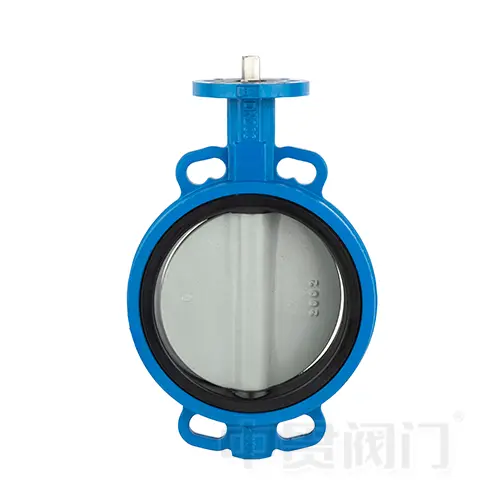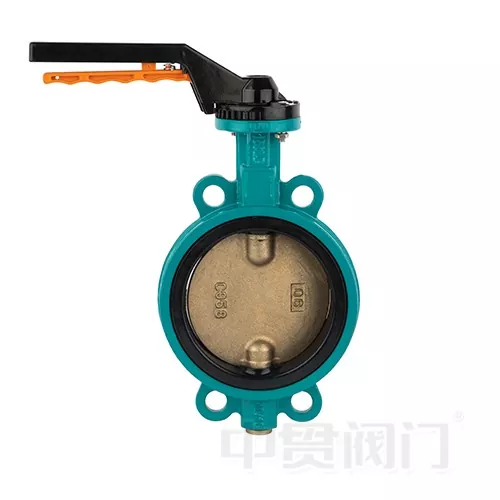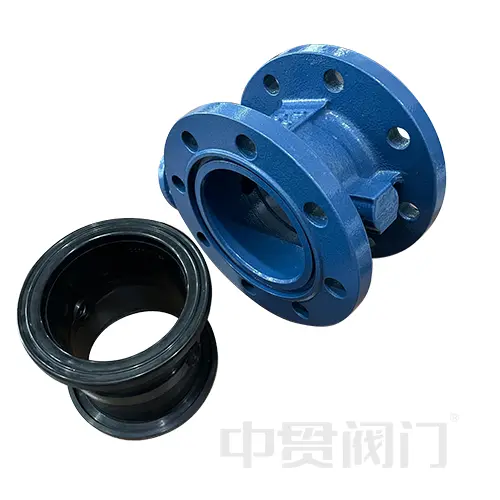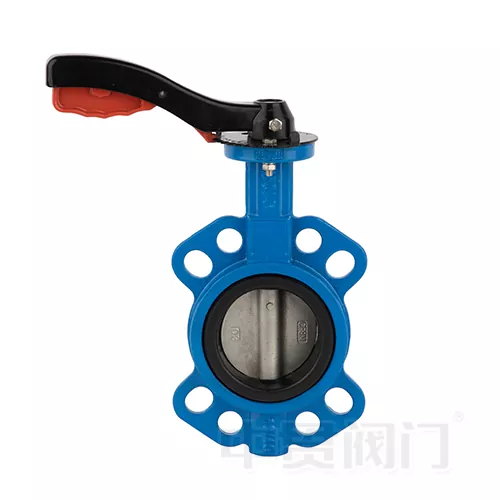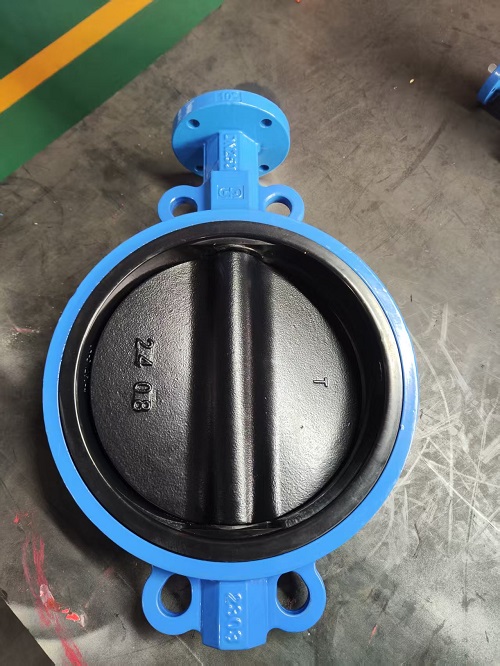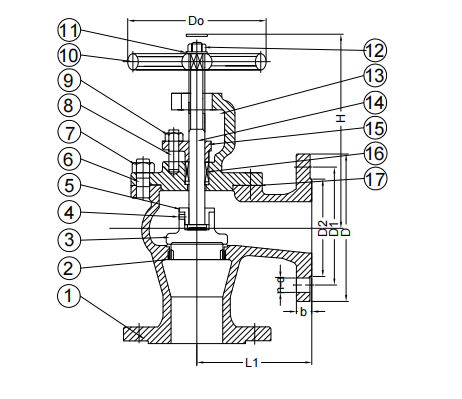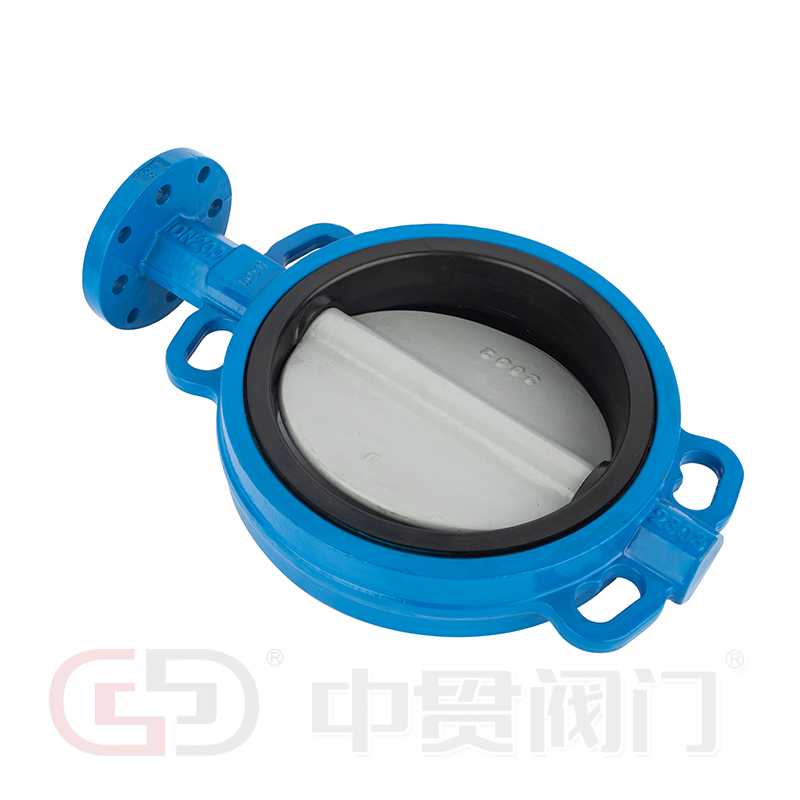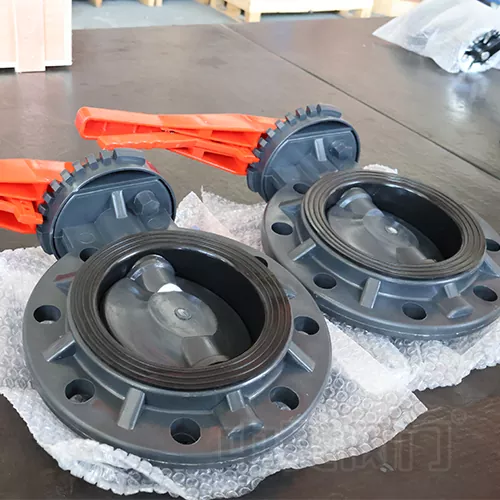

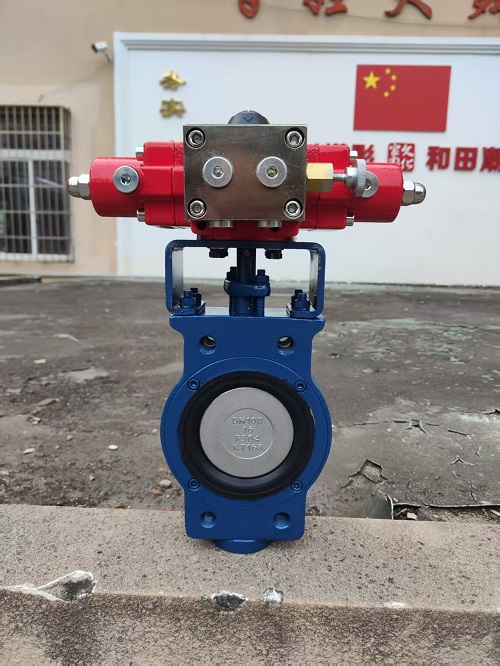
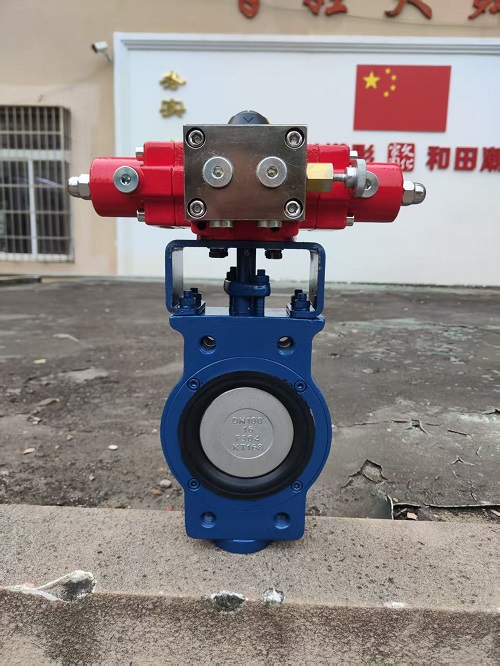
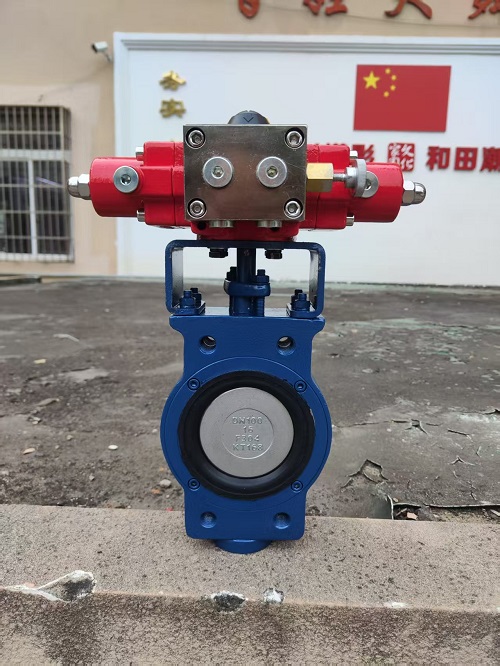
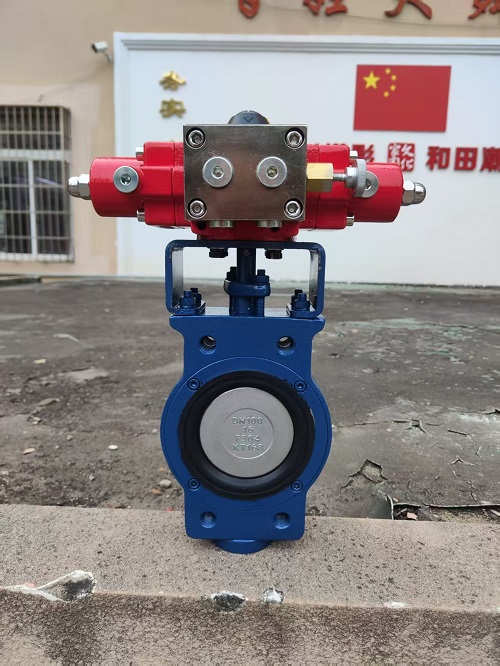
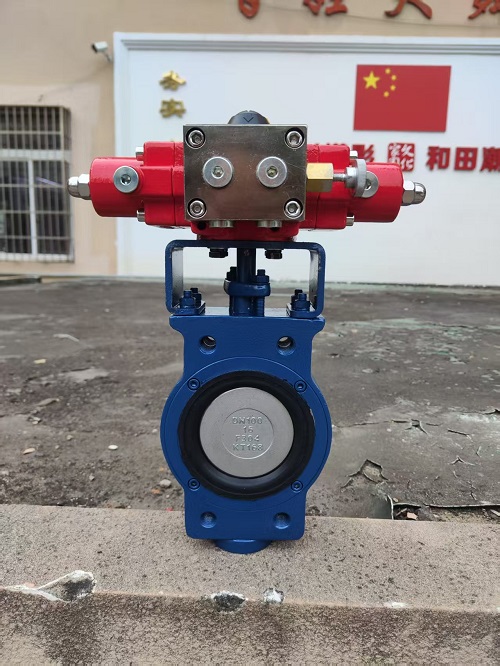
When procurement teams search for a CF8 Disc Butterfly Valve with Hydraulic Actuation, the real question is rarely about the valve alone. It is about whether the disc will resist the medium, whether the hydraulic actuator will deliver enough torque at the available supply pressure, and whether the body can be serviced without cutting the line. Zhongguan Valve has supplied quarter-turn valves from Wenzhou and Tianjin for more than 19 years, and this configuration is built around those three buying criteria.
Why This Configuration Fits Steam Isolation and High-ΔP Duty
The combination of a CF8 stainless disc, WCB carbon steel body and hydraulic actuator is not a generic catalogue build. Each material and component is selected for a specific operating condition.
Steam and condensate service
Soft-seated double offset valves are routinely specified for auxiliary steam, condensate and cooling-water circuits where tight shut-off matters more than raw temperature ceiling. The CF8 disc resists condensate corrosion better than a standard carbon steel disc, while the resilient seat delivers ANSI Class VI shut-off in both flow directions — a requirement that metal-seated valves cannot match at this price point.
High-differential pressure opening
A hydraulic actuator produces high torque from a compact envelope and responds faster than a manual gearbox. On lines where the disc must break away against a large pressure differential, hydraulic actuation removes the operator-dependent variability of handwheel operation and allows the valve to be tied directly into a hydraulic power unit or control panel.
Remote and automated control loops
The actuator can be integrated into an existing hydraulic control system, so stroke commands, travel limits and fail-safe position are managed centrally. For oil & gas, chemical processing and power-plant auxiliary systems, this is often the deciding factor between a pneumatic and a hydraulic solution.
Buying signal for project teams
If your line data includes a steam or condensate medium, a pressure class of PN10/PN16, and a requirement for fast open/close with remote control, this CF8 Disc Butterfly Valve with Hydraulic Actuation is the correct shortlist entry. Share the medium, DN and actuator supply pressure, and Zhongguan’s technical team will confirm seat material and torque margin before production.
Double Offset Design: Where the Wear Reduction Comes From
The valve uses a double offset geometry: the stem axis is offset from both the sealing surface and the pipeline centreline. When the valve opens, the disc lifts away from the seat before it begins to rotate. Friction at the sealing interface is therefore concentrated only at the final few degrees of closing, not across the full 90-degree travel.
- Lower breakaway torque — less torque is needed to unseat the disc, which allows a smaller hydraulic actuator for the same differential pressure.
- Reduced seat abrasion — the disc does not drag across the soft seat during the main part of the stroke, extending seal life in slurry, scaling and frequent-cycling duties.
- Stable throttling — because the disc moves with minimal resistance outside the seat contact zone, the valve behaves predictably when used for partial-travel control, not only on/off isolation.
Sealing System and Material Pairing
Resilient soft seat
The seat is available in EPDM, NBR or PTFE, selected against the actual medium temperature and chemical exposure. Soft-seat double offset valves achieve bidirectional zero leakage to ANSI Class VI, which in practical terms means bubble-tight shut-off under the specified test conditions. This is the sealing class most often requested by water, wastewater, HVAC and light chemical buyers.
CF8 disc, WCB body — the material logic
The body carries the pressure load, so WCB carbon steel provides structural integrity and cost efficiency at PN10/PN16. The disc, however, is the part that is continuously exposed to the flowing medium. CF8 (304) stainless steel gives the disc corrosion resistance and a harder, more stable sealing edge than a carbon steel disc, while remaining machinable to the surface finish required for soft-seat contact.
Material selection note: For strongly chlorinated or acidic media, a CF8M (316) disc is available on request. For steam above the standard soft-seat temperature window, the seat grade must be confirmed against the actual temperature, not the general range. Zhongguan’s pre-sales team provides a written seat-selection check before order release.
Semi-Lug Body: Installation and Maintenance Advantages
The semi-lug body uses tapped lug holes that accept through-bolts in the same way as a wafer valve. The practical difference appears during maintenance. Because the lugs are threaded, the valve can be supported by the flange bolts while the downstream pipe is disconnected — the valve does not have to be removed from the line to inspect the seat or disc.
- Faster seat inspection — the disc and seat are accessible after isolating and draining the line section, without full valve removal.
- Dead-end support — the lug threads help hold the valve in position during flange break-in, reducing the risk of dropping or misaligning the body.
- PN10/PN16 compatibility — the bolt pattern is matched to the mating flange standard at order confirmation; bolt grade and tightening torque should follow the flange bolting procedure with a cross-pattern sequence to avoid uneven gasket compression.
Hydraulic Actuation: Torque, Response and Integration
A hydraulic actuator is selected when the valve torque cannot be reliably delivered by a pneumatic actuator at the available plant air pressure, or when the stroke speed must be controlled independently of air supply fluctuations. Industrial hydraulic quarter-turn actuators commonly operate at control pressures up to 120–160 bar and can produce output torques well above the range of standard pneumatic cylinders.
What the actuator changes for the buyer
- High torque density — a smaller actuator footprint delivers the torque needed for high-ΔP breakaway, which matters on skids and offshore packages where space is limited.
- Fast, repeatable stroke — hydraulic fluid is essentially incompressible, so the 90-degree travel is stiff and predictable, even under varying line pressure.
- Direct system integration — the actuator can be connected to the plant hydraulic power unit, with travel limits adjusted during commissioning against the valve’s 90-degree travel.
- Manual override option — where specified at the ordering stage, a manual override or emergency hand pump can be supplied for hydraulic-power-loss scenarios.
Commissioning checkpoint
Over-travel of the disc can press the sealing edge too firmly into the soft seat and shorten seat life. Open and closed stroke limits must be set to the valve’s 90-degree travel and checked during commissioning, not assumed from the actuator alone. This CF8 Disc Butterfly Valve with Hydraulic Actuation is shipped with a travel-limit verification sheet for the site technician.
Typical Applications
The CF8 disc and soft-seat combination is best matched to media and duties where corrosion resistance and tight shut-off are more important than an all-metal high-temperature seat.
Steam and power
- Auxiliary steam and condensate isolation
- Cooling-water circuits with higher ΔP
- Power-plant balance-of-plant lines
Process and utility
- Oil & gas utility and process water
- Chemical processing — non-aggressive to mildly corrosive media
- HVAC and district cooling/heating
Water and wastewater
- Treatment plant isolation and throttling
- Pump discharge and header isolation
General industry
- Pulp & paper process lines
- Pharmaceutical and food-processing utilities (with suitable seat grade)
Specifications
| Item | Detail |
|---|---|
| Valve type | Double offset butterfly valve, soft seat |
| Body material | WCB carbon steel |
| Disc material | CF8 stainless steel (304) |
| Actuation | Hydraulic actuator |
| Connection type | Semi-lug body, tapped lug holes, through-bolt installation |
| Sealing system | Resilient soft seat — EPDM / NBR / PTFE (selected by medium and temperature) |
| Leakage standard | ANSI Class VI, bidirectional |
| Flange rating | PN10 / PN16 (customizable) |
| Temperature range | -20°C to +180°C, depending on seat material |
| Pressure rating | Medium to high pressure |
| Design basis | Double offset geometry, blow-out-proof stem, ISO 5211 actuator mounting interface |
| Actuator supply | Application-specific; confirmed against actuator datasheet and valve torque before commissioning |
| Testing | Pressure test and seat test before shipment; certificates available on request |
Questions Buyers Ask Before Ordering This Valve
Can the hydraulic actuator be sized from the valve DN alone?
No. Actuator sizing requires the valve torque at the actual differential pressure, the available hydraulic supply pressure, and the required stroke time. Zhongguan confirms the torque margin against the actuator datasheet before the order is released; specifying an actuator from DN alone is a common cause of slow or incomplete stroking on high-ΔP lines.
What seat material should be used for steam service?
The seat grade must be matched to the actual steam temperature, not the general valve temperature range. EPDM, NBR and PTFE have different temperature and chemical ceilings. The -20°C to +180°C range shown in the specification table is a valve-level range; the seat supplier’s limit for the specific grade governs the application.
How should semi-lug bolts be tightened on a PN16 flange?
Confirm the mating flange standard, bolt hole pattern, bolt grade and required torque. Tighten in a cross pattern to avoid uneven gasket compression, and use through-bolts or cap screws with washers as appropriate for the lug thread. The semi-lug design supports the valve during downstream dismantling, but the line must still be isolated and drained first.
What is checked if the valve does not seal after actuator closing?
First confirm that the actuator reaches the closed limit; second, verify that line pressure and flow direction match the design; third, inspect the seat and disc contact area for trapped debris or seal damage. The actuator should not be adjusted to force the disc harder into the seat, because that can damage the sealing edge rather than improve shut-off.
Is a manual override available?
Yes, where specified at the ordering stage. A manual override or emergency hand pump can be supplied with the hydraulic actuator. Without that option, the valve position should be confirmed and hydraulic supply restored before operation resumes.
Key Advantages for Procurement and Maintenance Teams
- Longer seat life in cycling duty — double offset geometry keeps the disc off the seat during most of the stroke, reducing friction and wear.
- Bidirectional Class VI shut-off — soft-seat resilience delivers zero-leakage performance in both flow directions, simplifying line isolation.
- Fast hydraulic response — high torque density and stiff hydraulic actuation suit high-ΔP opening and automated isolation sequences.
- Serviceable without full removal — semi-lug body allows downstream dismantling and seat inspection while the valve remains supported by the flange bolts.
- Material pairing against corrosion — CF8 disc for medium contact, WCB body for pressure containment and cost efficiency.
Manufacturer Background: Zhongguan Valve
Zhejiang Zhongguan Valve Manufacture Co., Ltd. has focused on valves for more than 19 years, with production bases in Tianjin (established 2016) and Wenzhou, Zhejiang. The Wenzhou base sits in Oubei, the pump-and-valve cluster of China, and handles butterfly valve production from DN40 to DN1600, with larger sizes on request. The company’s own production includes wafer, lug, U-section and flanged butterfly valves, and the broader supply chain covers ball valves, gate valves, foot valves, strainers, check valves and control valves.
For overseas buyers, the relevant points are practical: ISO certificates for the produced valve range, WRAS-certified seat options where required, in-house pressure testing before shipment, and a one-year warranty against quality defects. The technical team supports seat selection by medium and temperature, and sales staff provide production progress updates with quality inspection at the pressure-test stage. Current export experience includes Vietnam, Malaysia and Singapore, with stockists and engineering project companies as repeat buyers.
Explore the full Zhongguan butterfly valve range, review the complete product portfolio, or send line data for actuator sizing. For project buyers comparing semi-lug and wafer options, the butterfly valve selection page explains the maintenance and bolting differences before you commit to a PO.
Need a CF8 Disc Butterfly Valve with Hydraulic Actuation for Your Line?
Send medium, DN, pressure rating, actuator supply pressure and required response time. Zhongguan Valve will return a seat recommendation and actuator configuration matched to the duty.
Send InquiryZhejiang Zhongguan Valve Manufacture Co., Ltd. — Wenzhou & Tianjin, China. Valves for water, steam, oil & gas, chemical and HVAC systems. Specifications subject to confirmation against actual medium, temperature and actuator supply conditions.