Language

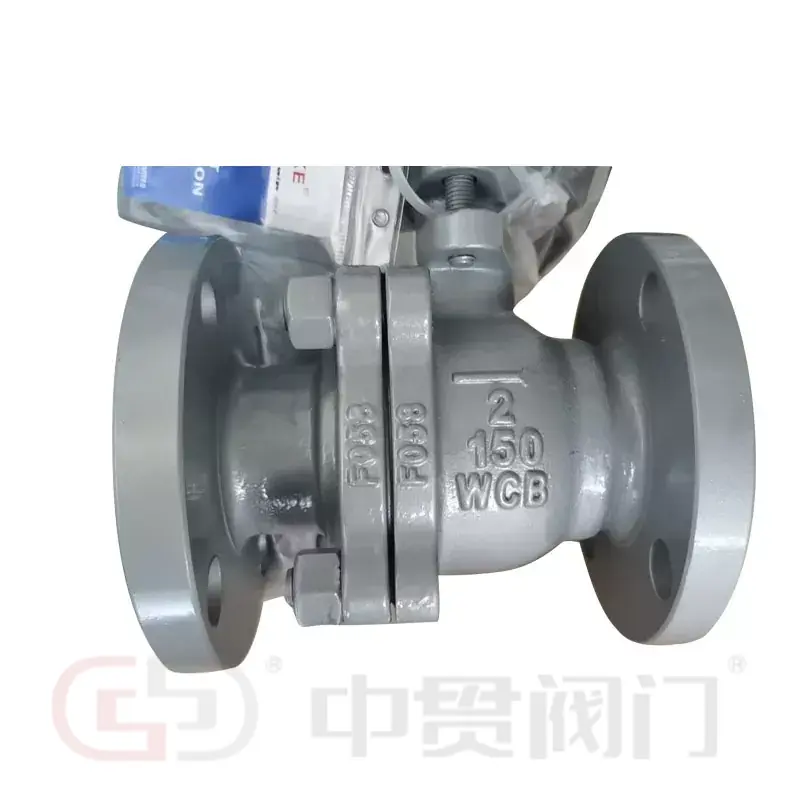
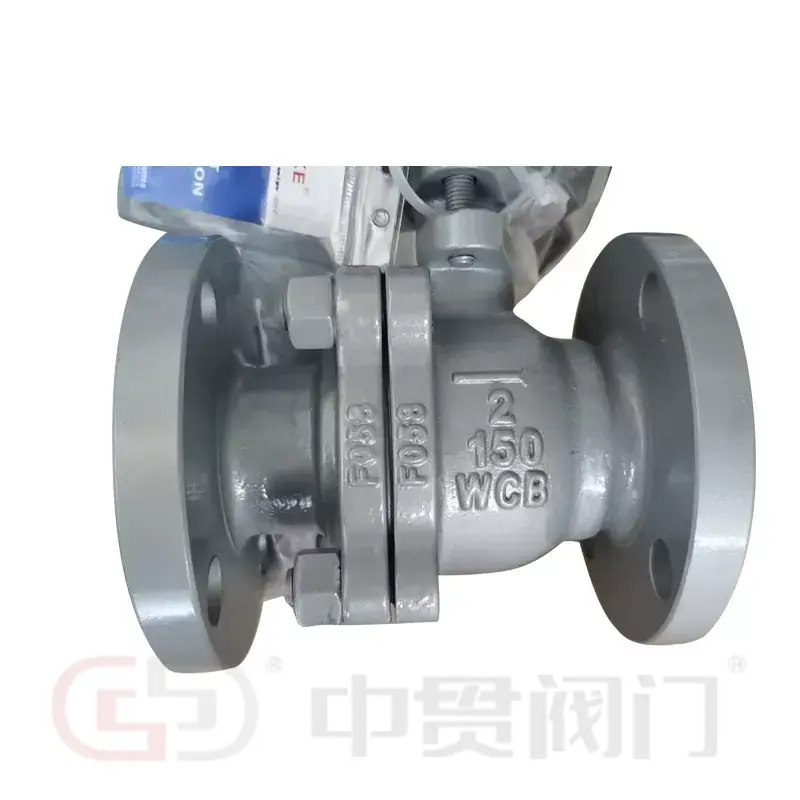
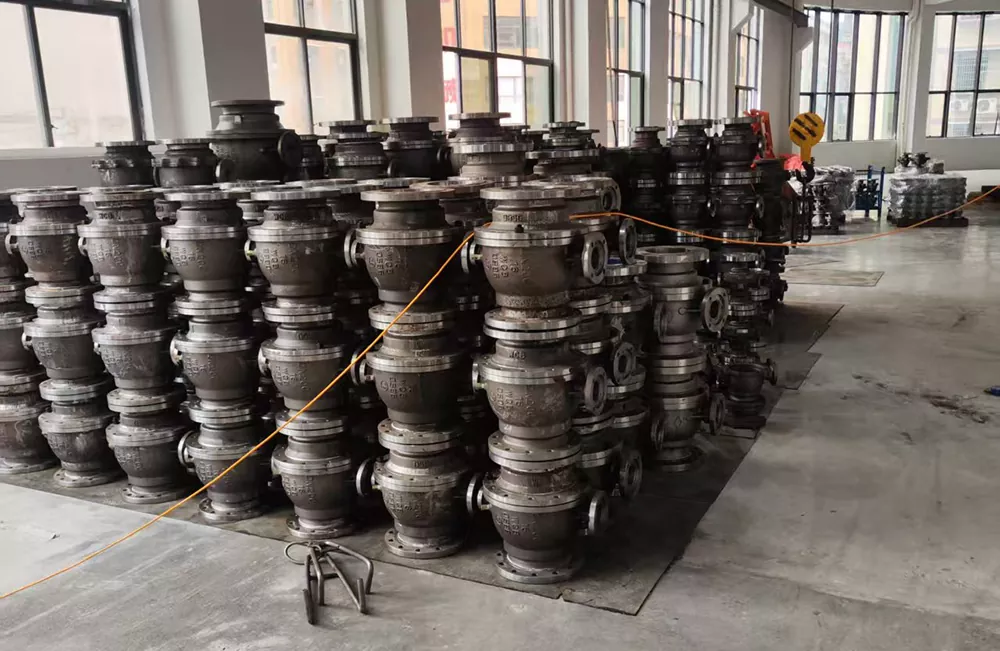
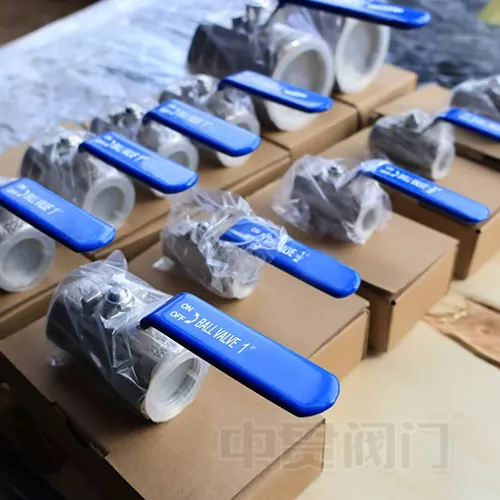
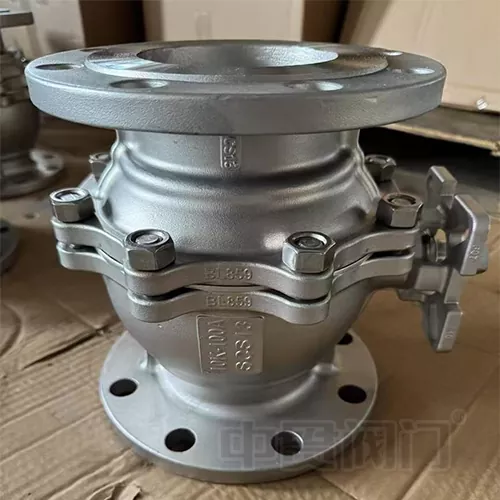
The valve uses WCB carbon steel for its main pressure-containing body. This material is commonly applied to industrial water, oil, and steam services where carbon steel is compatible with the operating medium. Zhongguan also lists LCB and WCC as alternative body materials, allowing material selection to reflect service temperature, mechanical requirements, and project specifications.
Key construction details include:
ASTM A216 WCB cast carbon steel for the main pressure-containing components.
The ball moves slightly under differential pressure, pressing against the downstream seat to establish the shut-off seal.
PTFE, R-PTFE, PEEK, and PPL are listed options for different sealing and operating requirements.
SS304, SS316, and 13Cr are available options.
The main body and secondary body are joined by bolts, allowing access to internal components during maintenance.
The combination of a carbon steel body and selected internal materials makes the WCB Floating Ball Valve with Flanged Connection suitable for compatible industrial media where dependable shut-off and practical maintenance are required.
Flanged ends provide a bolted connection to matching pipeline flanges. Zhongguan lists RF, FF, and RTJ sealing-face options to accommodate different piping specifications. These configurations support installation planning across industrial projects, provided the valve flange dimensions, pressure class, and facing match the connected equipment.
The listed size and pressure ranges cover multiple pipeline configurations. Class ratings and PN ratings belong to different designation systems and should not be treated as directly interchangeable without checking the applicable standard and design conditions.
Material compatibility and pressure-temperature limits determine whether a valve is suitable for a particular service. WCB carbon steel is generally suited to compatible water, oil, and steam applications, while the seat material affects sealing performance under the selected operating conditions.
Typical application areas include:
On-off isolation in compatible oil and gas service, subject to the specified pressure, temperature, and media requirements.
Isolation of compatible process fluids. Corrosive media require careful assessment of body, ball, stem, and seat compatibility.
Water and steam piping where the selected valve materials and pressure-temperature ratings meet the system requirements.
Pipeline isolation in industrial water systems, with material selection based on water chemistry and operating conditions.
Repeated opening and closing in compatible process lines, with operating frequency and maintenance requirements considered during selection.
The supplied product information gives a maximum temperature of 425°C for the described valve, but this figure should not be interpreted as the allowable temperature at every pressure rating or with every seat material. PTFE, R-PTFE, PEEK, and PPL have different temperature and service characteristics. The final allowable operating envelope depends on the complete valve configuration.
The floating-ball mechanism relies on differential pressure to push the ball toward the downstream seat. This contact helps form the shut-off seal, while the selected seat material determines its suitability for the medium and operating temperature.
The two-piece bolted body provides access to internal components for maintenance. Depending on the construction and maintenance procedure, the body can be opened to inspect or replace serviceable parts without dismantling the entire pipeline assembly. Isolation, depressurization, and safe handling remain necessary before maintenance.
Additional design and procurement considerations include:
An anti-blowout stem design is listed to help prevent stem ejection under abnormal pressure conditions.
A high-platform configuration compatible with ISO 5211 mounting is available for pneumatic or electric actuator installation.
A locking handle can be specified to help prevent unintended manual operation.
Flange facing, drilling, pressure class, face-to-face dimensions, and actuator interfaces must correspond to the project piping and control requirements.
Fire-safe and anti-static performance are not established by the supplied specifications. API 6D and ASME B16.34 are listed as design standards, and API 598 is listed as the testing standard; these references alone do not confirm fire-safe certification or anti-static construction.
For projects requiring additional safety features, the following points need specific technical documentation:
Fire-safe performance: Verify the applicable fire-test standard and supporting test report or certification.
Anti-static construction: Verify whether an anti-static device is incorporated and whether its performance has been tested.
Pressure and leakage testing: Confirm the applicable test procedure, pressure, acceptance criteria, and inspection records.
Material traceability: Identify the specified body, ball, stem, and seat materials in the order documentation.
Operating limits: Establish allowable pressure and temperature for the selected size, pressure class, and seat combination.
These checks are particularly relevant to hydrocarbon service, high-temperature piping, and installations with defined safety requirements.
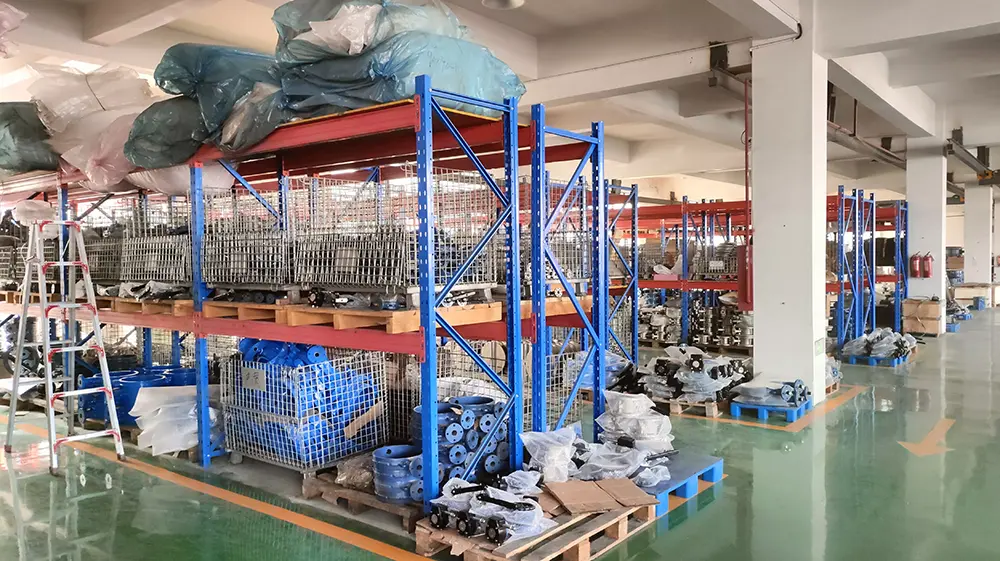
Zhongguan operates valve production bases in Tianjin, established in 2016, and Oubei, Yongjia, Wenzhou, where Zhejiang Zhongguan Valve Manufacture Co., Ltd. was founded in 2019. The company has more than 19 years of experience in the valve industry.
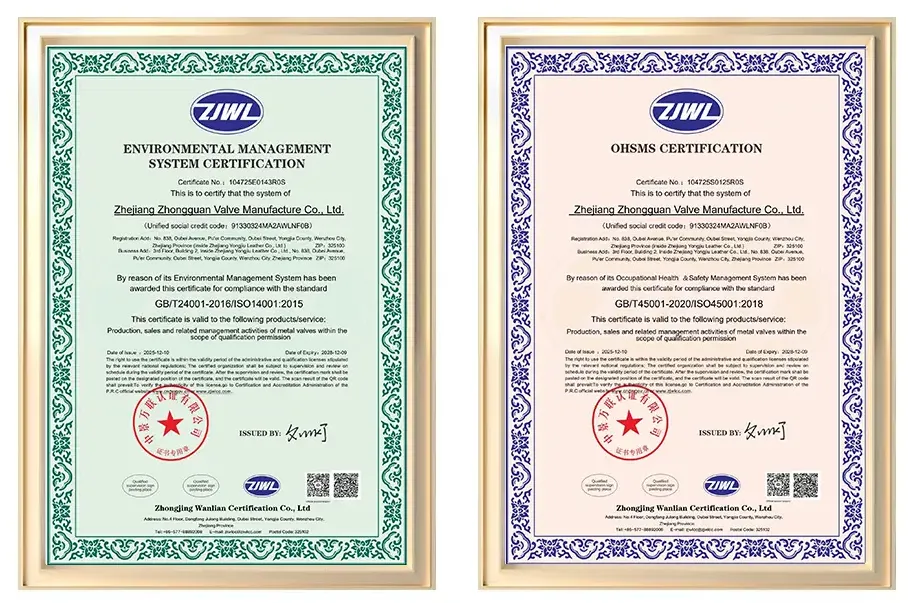
Production equipment includes valve pressure-testing machines, valve-seat installation equipment, shaft-sleeve fitting equipment, and marking machines. Zhongguan holds ISO certificates for its valve products and offers WRAS-certified seats for applicable butterfly valves. Review our certificates and cooperative cases for more detail.
For the WCB Floating Ball Valve with Flanged Connection, selection details include WCB, LCB, or WCC body material, DN15–DN600 size range, pressure class, RF/FF/RTJ flange facing, and seat material. Related options in the same ball valve family are also available. Zhongguan also works with engineering companies and stockists in Vietnam, Malaysia, and Singapore.
WCB is a cast carbon steel material used in many industrial piping applications. The supplied information lists a maximum temperature of 425°C for this valve, but the permitted operating temperature must be assessed alongside pressure, seat material, and the complete valve configuration.
Suitability depends on the chemical composition, concentration, temperature, and compatibility of the body and internal materials. Stainless steel ball or stem options do not, by themselves, establish that the complete valve is suitable for a corrosive medium.
Provide the nominal diameter, pressure class, flange facing, operating medium, pressure and temperature conditions, seat preference, and manual or automated operating requirements. Any fire-safe, anti-static, or project-specific testing requirements should also be stated.
Address
No. 838, Oubei Avenue, Yongjia County, Wenzhou City, Zhejiang Province, China
Tel