Language

NDT is short for Non-Destructive Testing. As its name implies, it is an engineering technique served as inspecting the internal and surface defects (e.g., cracks, porosity, slag inclusions) of a test object (such as a valve, pipe, or weld) without impairing or wrecking it.
It compares a valve to a "CT scan" or "ultrasound". In the same manner that a doctor can diagnose internal organs without performing surgery on a patient. NDT can verify flaws deep inside the valve's material without cutting it open.
Why is NDT Significant for Valves?
In valve testing, the shell strength test and the seat seal test confirm whether the valve’s functions are as required. NDT, on the other hand, validates the valve's "material health". A valve body material containing tiny internal cracks or porosity is at risk of sudden rupture following long-time exposure to high pressure, high temperature, or corrosive media, causing a serious accident.In consequence,NDT is mainly employed to inspect raw castings, forgings, and finished welds. It serves as the foremost safeguard for guaranteeing valve safety and reliability.
The Most Popular NDT Methods in the Valve Industry
|
Method Name |
Abbreviation |
Working Principle |
Main Detectable Defects |
Common Valve Applications |
|
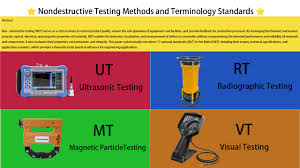
Radiographic Testing |
RT |
X-rays or gamma rays penetrate the component and record an image on film, where internal defects manifest as contrasts in density. |
Internal defects: porosity, slag inclusions, shrinkage cavities, cracks. |
Examining the internal integrity of valve body castings as well as welds on valves and piping. |
|
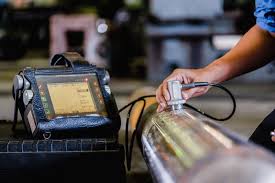
Ultrasonic Testing |
UT |
Employs high-frequency sound waves that are sent into the component. By analyzing the waves that bounce back, the position and dimensions of any defects can be analyzed. |
Internal defects: cracks, laminations, lack of fusion. More sensitive to planar defects (like cracks) than RT. |
Checking the wall thickness and internal cracks of valve bodies and bonnets,with particular emphasis on thick-walled valves. |
|
Magnetic Particle Testing |
MT |
Applicable solely to ferromagnetic substances like carbon steel. The part is magnetized, and flaws cause a leakage field that attracts magnetic particles, forming a visible indication. |
Surface and near-surface defects: cracks, seams, laps. |
Monitoring the surface condition of valves for quench cracks, grinding cracks, or other processes. |
|
Liquid Penetrate Testing |
PT |
A highly penetrate liquid is applied to the component's surface. Capillary action causes it to seep into surface-connected flaws. As a result, a developer is used to extract the penetrate, revealing the defect. |
Surface-breaking defects: cracks, pinholes, cold shuts. |
Evaluating the surface of austenitic stainless steel (not suitable for MT due to its non-ferromagnetic nature) as well as non-magnetic alloy valves. |